
Introduction to Soy Sauce Eggs
Soy sauce eggs are a delightful fusion of flavor and convenience, making them a perfect go-to for young professionals juggling busy schedules. With just a simple marinade, these protein-packed snacks or toppings can elevate your meals without demanding extensive cooking time.
Why Soy Sauce Eggs are a Game-Changer for Young Professionals
In today’s fast-paced world, finding quick yet nutritious options can be challenging. That’s where soy sauce eggs step in. With a prep time of only 15 minutes and a marinating time of just four hours, this recipe is incredibly efficient. You can easily whip up a batch ahead of time then enjoy them throughout the week.
These eggs are not just versatile but also loaded with flavor, making them a fantastic addition to salads, rice bowls, or as a standalone snack. Plus, incorporating soy sauce eggs into your diet means you're getting a great source of protein—essential for keeping your energy levels high.
Did you know that eggs contain all nine essential amino acids? According to the American Egg Board, they are considered one of the best sources of protein available, which is why incorporating them into your meals can help sustain your productivity.
So if you're looking for a delicious, easy, and healthy addition to your busy lifestyle, soy sauce eggs could just be your new best friend!
Now, let's dive into the recipe and learn how to make these yummy eggs at home!
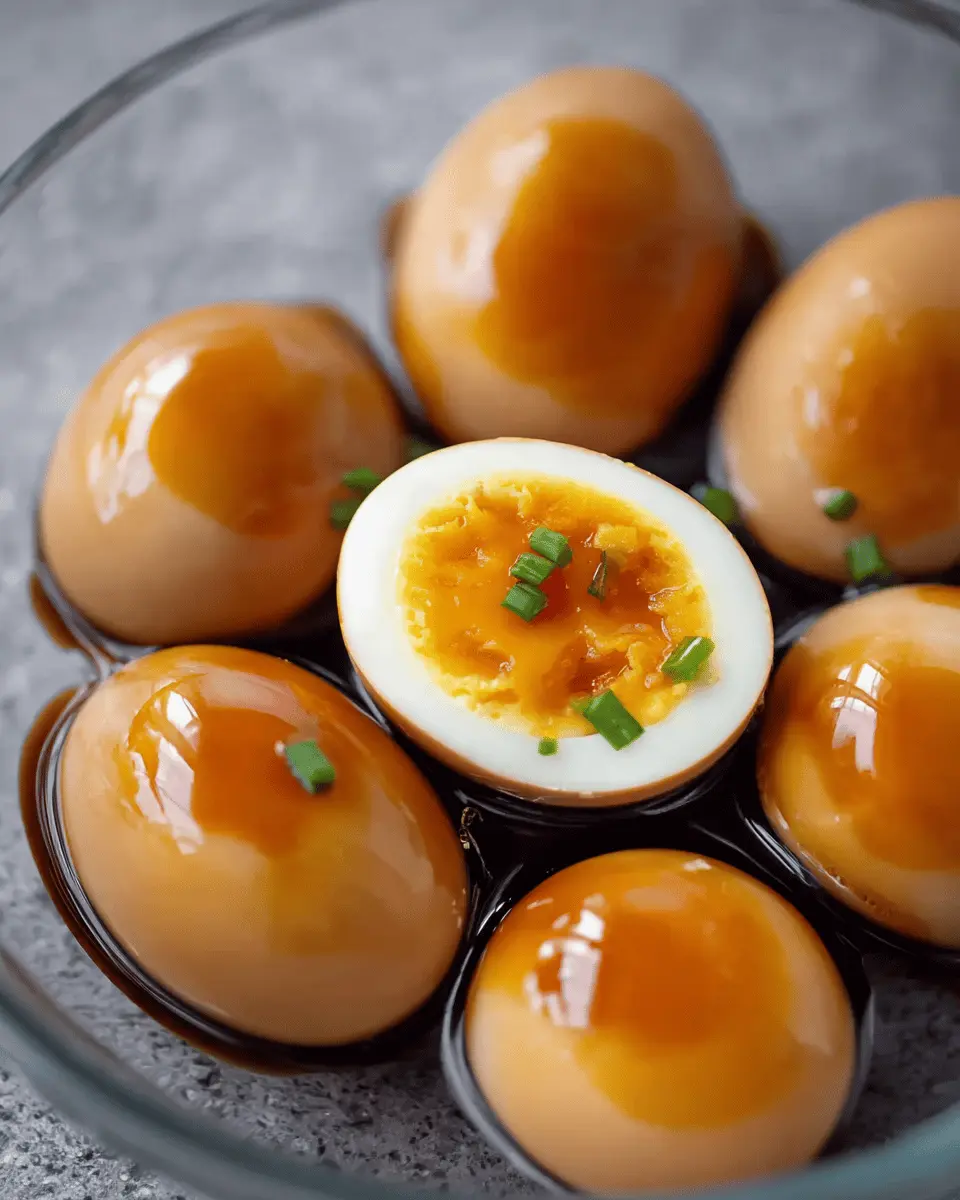
Ingredients for Soy Sauce Eggs
To create the perfect soy sauce eggs, you'll need a handful of simple yet flavorful ingredients that come together beautifully. Here’s a detailed list to guide you!
- 1 cup water: This is the base for your marinade, helping to balance the flavors.
- ½ cup soy sauce: The star of the show! Choose a good-quality soy sauce for richer taste.
- 1 tablespoon sugar: A hint of sweetness to counteract the saltiness of the soy sauce.
- 6 tablespoons mirin: This sweet rice wine adds depth and complexity to your marinade. If you’re looking for a non-alcoholic substitute, you can use a mixture of water and sugar.
- 2 cloves garlic: Smashed for a hint of aroma and flavor.
- ¼-inch piece of unpeeled ginger: Adds warmth and spice to your soy sauce eggs.
- 6 large eggs: Fresh, cold eggs straight from the fridge for that perfect texture.
- Ice: Essential for shocking the eggs to halt cooking after steaming.
For more tips on ingredients, you might find this article on cooking techniques helpful!
Step-by-step Preparation for Soy Sauce Eggs
Making soy sauce eggs is an enjoyable culinary adventure that brings delicious flavors to your kitchen. Follow these easy steps to prepare this delightful dish, perfect for snacking or adding to your favorite rice bowl!
Make the marinade
Start by creating a flavor-packed marinade. In a small saucepan, combine 1 cup of water, ½ cup of soy sauce, 1 tablespoon of sugar, and 6 tablespoons of mirin. To these ingredients, add 2 smashed cloves of garlic and a ¼-inch piece of unpeeled ginger, also smashed. Bring the mixture to a boil over medium-high heat, then reduce it to medium-low, allowing it to simmer for 3 to 5 minutes until the sugar dissolves. This step is crucial for melding those fantastic flavors together!
Once your marinade is ready, transfer it to a heatproof container that can hold 6 eggs comfortably in a single layer. Let it cool while you prepare the eggs.
Cook the eggs
While your marinade is cooling, it’s egg-cooking time! First, fit a medium saucepan with a steamer basket and add enough water to just reach the bottom of the basket. Cover and bring the water to a boil over medium-high heat.
Now, carefully add the cold eggs to the steamer basket in a single layer. Cover again, and steam for 6 to 7 minutes. For a more custardy yolk, stick to 6 minutes; for a slightly firmer texture, aim for 7 minutes. If you don’t have a steamer basket, simply fill a pan with water, bring it to a boil, and cook the eggs for the same duration.
Chill the eggs
Once your eggs are done steaming, it’s time to cool them down. Prepare an ice bath by filling a medium bowl with ice and cold water. Immediately transfer the cooked eggs into this bath to stop the cooking process—remember, we want that perfect jammy yolk!
Peel the eggs
After the eggs have chilled for about 5 minutes, it’s time to peel them. Gently tap each egg against a hard surface using the back of a spoon, which helps crack the shell evenly. Start peeling from the wider end, where the air pocket is located, making it easier. If any shell bits cling on, dunk them back into the ice bath for a quick rinse. Place the peeled eggs on a paper towel to dry.
Marinate the eggs
Now comes the fun part—marinating! Add the peeled eggs to your cooled marinade, ensuring that they are fully submerged. Cover the container and refrigerate for at least 4 hours, or up to 24 hours for a more intense flavor. Remember, the longer they soak, the saltier they’ll become.
As you enjoy your delicious soy sauce eggs, don’t forget about the leftover marinade! It makes an excellent drizzle over rice or vegetables, elevating any dish effortlessly.
For more exciting recipes and culinary tips, check out Simply Recipes or Bon Appétit. Happy cooking!
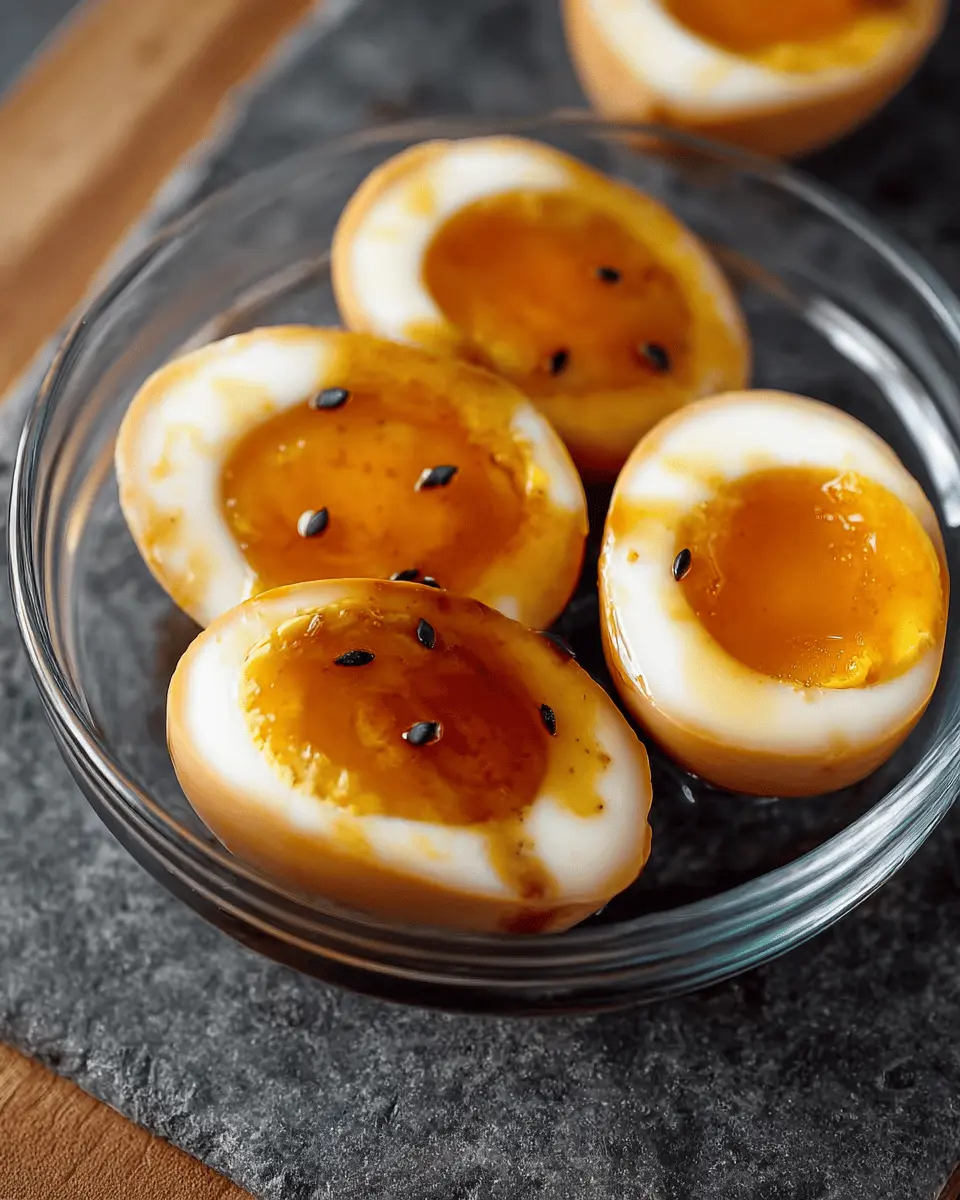
Variations on Soy Sauce Eggs
When it comes to perfecting your soy sauce eggs, personalizing this classic dish can make it even more delightful. Here are two tempting variations that you should definitely try:
Spicy Soy Sauce Eggs
If you're a fan of heat, add a kick to your soy sauce eggs by incorporating chili oil or fresh slices of jalapeño into the marinade. For an extra level of flavor, consider sprinkling some red pepper flakes before serving. This spicy twist pairs wonderfully with rice or as a topping for ramen.
Sweet Soy Sauce Eggs
Looking for something subtly sweet? Swap out regular soy sauce for a sweeter version or add a touch of honey or maple syrup to your marinade. This variation creates a delightful contrast with the umami flavors, making it a perfect addition to salads or grain bowls.
Experiment with these variations to find your favorite way to enjoy soy sauce eggs—the options are limitless!
Cooking Tips and Notes for Soy Sauce Eggs
Creating soy sauce eggs is a delightful venture, especially for those new to cooking. Here are some practical tips to elevate your experience:
-
Perfect Cooking Time: Timing is crucial for achieving the desired consistency of the yolk. Use a timer to ensure your eggs are cooked precisely—this prevents overcooking and ensures a perfect, creamy center.
-
Marination Magic: For the best flavor, allow your eggs to marinate for at least 4 hours, but going up to 24 hours will deepen the taste. Just remember, the longer they soak, the saltier they get!
-
Storage Tips: If you have leftovers, store the eggs out of the marinade to avoid over-salting. Refrigerate them, and don’t forget to use that marinade as a delicious topping for rice or salads!
For more tips on egg cooking techniques, check out this Egg Science. Happy cooking!
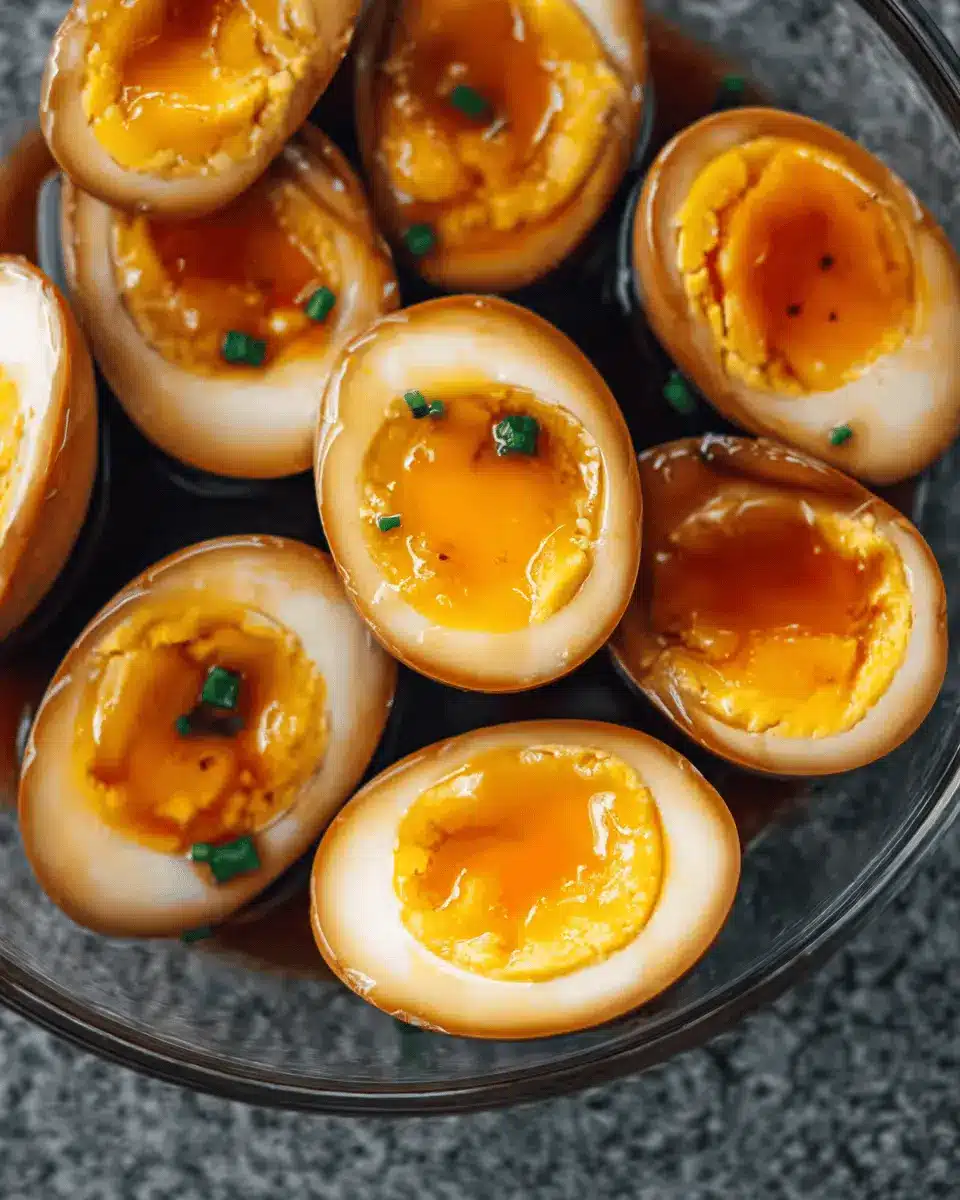
Serving Suggestions for Soy Sauce Eggs
Soy sauce eggs can elevate a variety of dishes or stand on their own as a delightful snack. Here are some tasty serving ideas to enjoy these marinated gems:
-
On Rice Bowls: Slice the soy sauce eggs in half and place them atop steamed rice, drizzling with additional marinade for extra flavor.
-
With Salads: Add chopped soy sauce eggs to a hearty salad for a protein boost, perfect for a satisfying lunch or dinner.
-
As a Snack: Enjoy them as a quick snack or appetizer, paired with fresh veggies or even some rice crackers.
-
In Ramen: These eggs make an excellent addition to ramen or noodle soups, enriching the broth's flavor.
Experimenting with these serving suggestions can make the most of your soy sauce eggs! For a fresh twist, consider adding pickled vegetables or sesame seeds for some crunch. Want to explore more? Check out these healthy breakfast ideas for inspiration!
Time Breakdown for Soy Sauce Eggs
When preparing your soy sauce eggs, it’s helpful to know how the time breaks down. Here’s a quick guide:
-
Preparation Time: 15 minutes
Perfect for gathering your ingredients and getting the marinade ready. -
Cooking Time: 12 minutes
This is all about steaming those eggs to the ideal texture. -
Marinating Time: 4 hours
Patience pays off! For the best flavor, let them soak for at least 4 hours, but up to 24 if you like them extra savory. -
Total Time: 4 hours and 27 minutes
Most of this time is hands-off, so you can go about your day while the eggs work their magic!
If you're looking for quick meal ideas, check out these easy snacks! Happy cooking!
Nutritional Facts for Soy Sauce Eggs
When savoring your soy sauce eggs, it's good to understand their nutritional profile. Here's a quick breakdown:
- Calories: Each serving of soy sauce eggs contains approximately 97 calories, making them a light yet satisfying snack or addition to any meal.
- Protein: With 7g of protein per serving, they are a fantastic source of sustenance that supports muscle health while keeping you energized throughout the day.
- Sodium: However, these eggs do have a higher sodium content, clocking in at around 570mg per serving due to the soy sauce used in the marinade. Always consider your sodium intake, especially if you're watching your salt consumption.
This delightful snack brings not just flavor but also a bit of nourishment, perfectly complementing a variety of dishes. For more insights into nutrition, check out the USDA's nutritional database.
FAQs about Soy Sauce Eggs
Can I use a different type of soy sauce?
Absolutely! While traditional soy sauce works perfectly for soy sauce eggs, you can experiment with other types. For a milder flavor, try using light soy sauce or even tamari if you're looking for a gluten-free option. If you love deeper, more complex flavors, a drizzle of dark soy sauce can add additional depth and color.
How long can I marinate the eggs?
For the best flavor, aim to marinate your soy sauce eggs for at least 4 hours; however, you can let them sit for up to 24 hours. Just keep in mind that the longer they soak, the saltier they will become. If you’re aiming for a subtler taste, opt for a shorter marination—trust us, they’ll still be delicious!
What can I do with leftover marinade?
Don't toss that leftover marinade! It’s a flavor powerhouse that can be drizzled over rice or used to enhance stir-fry dishes. Store it in the fridge for up to 4 days and enjoy its rich umami goodness in various meals. You might even find that it becomes a staple in your cooking toolkit!
Feel free to dive into more about soy sauce and its versatility on Spruce Eats for additional tips!
Conclusion on Soy Sauce Eggs
In summary, soy sauce eggs are a delightful addition to your culinary repertoire. They're versatile, perfect for snacking or as a protein-rich ingredient in meals. With a simple method and few ingredients, making them at home promises a flavorful bite that elevates any dish. Give it a try and enjoy!
Soy Sauce Eggs
Equipment
- Saucepan
- Steamer basket
- Heatproof container
- medium bowl
Ingredients
Marinade
- 1 cup water
- ½ cup soy sauce
- 1 tablespoon sugar
- 6 tablespoons mirin
- 2 cloves garlic smashed
- ¼ inch ginger unpeeled, smashed
Eggs
- 6 large eggs cold straight from the fridge
- Ice for chilling the eggs
Instructions
Marinade Preparation
- In a small saucepan, add the water, soy sauce, sugar, mirin, garlic, and ginger. Bring to a boil over medium-high heat, then reduce to medium-low and simmer for 3 to 5 minutes until sugar dissolves and marinade reduces slightly.
Egg Cooking
- Fit a medium saucepan with a steamer basket, fill with water to reach the bottom of the basket, cover, and bring to a boil. Add eggs in a single layer and steam for 6 to 7 minutes for desired yolk consistency.
- If no steamer, boil enough water to fully submerge the eggs and cook for 7 minutes.
Chilling
- Make an ice bath with ice and cold water in a medium bowl. Transfer cooked eggs to the ice bath immediately to fully cool.
Peeling
- Tap each egg with the back of a spoon to crack the shell and peel starting at the wide bottom end, rinsing in the ice bath to remove any stuck-on shells.
Marination
- Add peeled eggs to the marinade, cover, and refrigerate for at least 4 hours and up to 24 hours. Store leftovers in a container with a tight-fitting lid.


Leave a Reply